


Crabbing by Hand in Gasparilla Sound: A Simple Family Adventure

Updated: Sep 23
Sometimes the best adventures don't go exactly as planned.
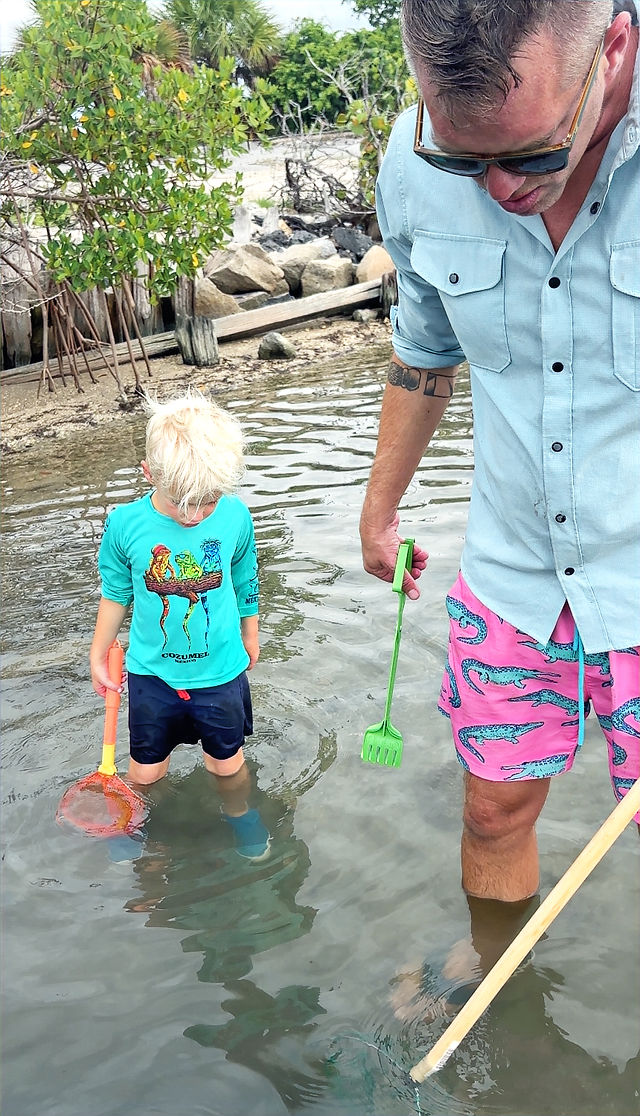
We headed out into the shallow waters of Gasparilla Sound armed with nothing more than a long-handled net, a pair of crab tongs, a bucket, and a whole lot of curiosity. Our goal wasn't dinner. We simply wanted to see what we could find, learn about these incredible animals up close, and give the kids a hands-on nature experience they'll remember.
And it did not disappoint.

What We Found
The shallow seagrass flats are full of life.
We spotted several stone crabs, and although they were surprisingly good at hiding, we managed to catch quite a few.
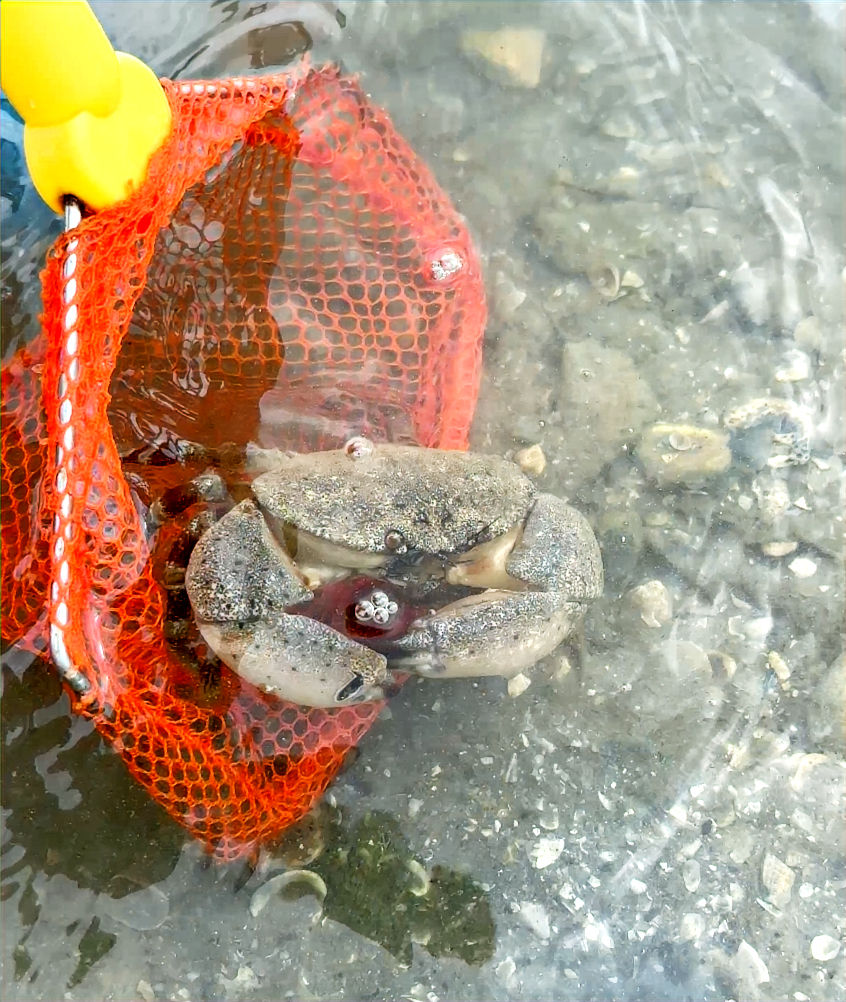
We also found a couple of blue crabs, but they were much quicker than we were. Every time we got close, they darted away in a flash.
Eventually a line of thunderstorms rolled in, lightning began appearing in the distance, and we called it a day. Florida weather always gets the final vote.
It was so fun though, that we now definitely recommend this to anyone looking for a family adventure!
The Gear We Use
You don't need much to enjoy this adventure:
A long-handled landing net
Crab tongs (to safely grab larger crabs)
A bucket
Water shoes or old sneakers with good traction
Polarized sunglasses (they make spotting crabs much easier)
Plenty of sunscreen and drinking water
That's it.


Why We Used a Bucket
As we caught the first couple crabs, we placed it into a bucket briefly while the kids observed it.
Since we weren't harvesting them, we weren't trying to keep them for long. The bucket simply gave us a safe place to look at each crab before releasing it where we found it.
Stone crabs can tolerate short periods out of the water because they naturally experience changing water levels around tides. For brief observation, it's perfectly reasonable to keep them in a shaded bucket, especially if you're releasing them shortly afterward.
A few tips:
Keep observation time short.
Keep the bucket out of direct sun so it doesn't overheat.
Avoid overcrowding multiple crabs together.
Return each crab to the same general area where you found it.
If you're keeping a crab longer than just a quick observation, you'll want to provide seawater and proper aeration (otherwise they will suffocate). For our adventure, the bucket was simply a temporary "nature classroom."
A Great Way to Learn
One of our favorite parts wasn't actually catching the crabs.
It was slowing down.
The kids learned how stone crabs camouflage themselves among the grass and sand.
We talked about why they have such powerful claws, how blue crabs move differently, and why respecting wildlife matters.
There's something special about seeing marine life where it actually lives instead of behind aquarium glass.
A Few Safety Tips
If you're planning your own crabbing adventure:
Never enter the water if lightning is nearby.
Watch your footing around oyster beds and shells.
Wear protective footwear.
Handle crabs carefully to avoid pinches.
Always check current Florida regulations before harvesting any crabs, even if your plan is only to observe them.
Why We'll Be Back
We didn't come home with dinner. We came home with stories.

The excitement of spotting a crab hidden in the grass, working together to catch it, watching it up close, and then releasing it back into the Sound made for one of those simple adventures that ends up becoming a favorite family memory.
Sometimes all you need is a net, a bucket, and a willingness to see what nature has waiting just beneath the surface.
Know Before You Go
Best Tide
Low tide is usually your best opportunity. As the water recedes, crabs become easier to spot on the seagrass flats and sandy bottom.
What You'll Need
Long-handled landing net
Crab tongs
Bucket for brief observation
Closed-toe water shoes
Polarized sunglasses
Sunscreen and water

Where to Look
Search the shallow seagrass flats, sandy patches, mangrove edges, and around oyster bars (carefully- the shells are razor sharp).
Species You Might Find
We spotted several stone crabs and a few speedy blue crabs, but you may also see hermit crabs, fighting conchs, sea stars, fish, and all kinds of other marine life depending on the season and tide.
Regulations
If you're planning to harvest crabs instead of simply observing them, be sure to check the current Florida Fish and Wildlife Conservation Commission (FWC) regulations before your trip. Stone crabs and blue crabs have different rules regarding seasons, sizes, and harvesting methods.
Some of our favorite family adventures don't cost a thing...they just require slowing down, getting your feet wet, and staying curious about the incredible world around you.
About the author. Kate is a Florida-based mom of two and the writer behind SunshineFamGuide. She's been camping in the Keys for over 20 years, moved her family from Denver to Southwest Florida, and personally visits every park, beach, spring, and cruise she writes about...usually with two kids and a bucket of gear in tow.


Comments